
Lemhi Parole and Probation
Idaho divides the decision and supervision roles. A judge orders probation. The Idaho Commission of Pardons and Parole decides whether an eligible person may leave prison on parole and also makes parole revocation decisions. The Idaho Department of Correction Division of Probation and Parole supervises people on state probation and parole. Lemhi County Probation handles a separate local track that includes county probation and pretrial work. Calling the right office starts with the kind of order in the court file.
Parole is release from prison confinement into community supervision during the indeterminate part of a sentence. Probation is a court sentence that places a person in the community under terms set by the court. Neither term means final discharge. A person can be physically out of prison, live in Lemhi County, and remain under IDOC authority for years.
| Point | Parole | Probation |
|---|---|---|
| Who orders it | Idaho Commission of Pardons and Parole | Sentencing court |
| What comes first | Prison confinement and parole eligibility | A court judgment, sometimes without prison |
| State supervisor | IDOC Division of Probation and Parole | IDOC for state felony probation; county office for its local orders |
| Proof it ended | Final discharge or Gold Seal | Discharge or court/agency completion record |
- Parole
- Supervised community placement after part of a prison sentence.
- Probation
- Court-ordered supervision in the community.
- Discharge
- The formal end of the sentence or supervision term.
- Absconder
- A supervised person alleged to have stopped reporting or left supervision without approval.
Verify Lemhi Post-Release Supervision
The official IDOC Resident/Client Search is the main public check for state supervision. It covers more than prison residents. It may include people on court probation, parole, or other active IDOC jurisdiction. County-only pretrial and probation records may require Lemhi County Probation or the court instead.
- Search with the IDOC number when known. Otherwise use last name and first name.
- Compare the IDOC number, birth year, sentencing county, and case number. A name alone is not enough.
- Open the detail record and read overall status, physical location, sentence status, supervising district, officer, and data-current time.
- Look for “In community” and “Released to Supervision.” Those fields support state supervision, not final discharge.
- Call the listed office when the record conflicts with present custody or seems stale. Use the court file for a county order.
- For completion, seek “Discharged” and request the final agency record when the exact date matters.
The public record can carry two facts that look inconsistent. “In community” describes legal supervision status, while a physical-location line can name Lemhi County Jail because of a new case or violation hold. Read both fields. Confirm present custody with the jail and supervision with IDOC. The broader Lemhi County released inmate search explains how the sheriff entry and court docket complete that check.
Lemhi Supervision Office Split
Lemhi County belongs to IDOC Probation and Parole District 7. Its official page lists Idaho Falls and satellites in Rexburg and Blackfoot, but no IDOC office in Salmon. County Probation sits beside the courthouse complex in Salmon and names a pretrial assistant. That local presence does not make it the state parole office. Ask which judgment or supervision order controls before sharing case details.
IDOC District 7
2225 West Broadway Street, Suite A
Idaho Falls, ID 83402
208-528-4220
Official District 7 office page
Lemhi County Probation and Pretrial
205 Courthouse Drive
Salmon, ID
Main: 208-742-1720
Adult/juvenile officer: 208-742-1716
Official county probation page
District 7 routes state cases. Lemhi County Probation routes its local pretrial and county supervision work. The sentencing court can identify which order applies when the public search does not show the person.
Lemhi Supervision Warrants
Conditions are the rules attached to supervision. They can include reporting, travel approval, treatment, payment, or case-specific limits, but only the order and supervising officer establish the terms for one person. A violation allegation does not by itself show the final outcome. It may lead to an internal response, a court hearing, a parole warrant, arrest, revocation, or reinstatement.
IDOC maintains a statewide Fugitive Recovery page rather than a Lemhi-only absconder list. The public list may display a name, image, and IDOC number with a tip route. Absence from that featured list does not prove compliance. Idaho Code § 20-1007 says a Commission warrant suspends parole and treats the parolee as a fugitive between warrant and arrest, subject to Commission treatment of that time. A warrant or forfeiture can therefore alter a date that once appeared in a sentence record.
Idaho VINE may send an alert when a participating jail or IDOC reports a custody event. It does not prove why supervision changed. Confirm the event with the reporting agency and use the Commission or court record for the legal action.
Lemhi Supervision and Discharge
Release from confinement and discharge are separate milestones. “Released to Supervision” is the date the person most recently entered supervision through a court or the Commission. “Sentence Satisfaction Date” is a scheduled or recorded endpoint. Neither label should be treated as proof that all supervision has already ended.
The Commission FAQ describes a final parole discharge document known as a Gold Seal. It is routed through the last supervision district and may take up to a month to arrive. A short wait for the paper does not by itself conflict with the calculated date. When the exact end matters, request the discharge record from IDOC Records and keep the status snapshot, request response, and final document distinct.
Lemhi Parole Hearing Records
The Commission hearing schedule uses weekly session blocks in 2026 and may be amended. A listing shows that a hearing was scheduled. It does not show that release took place. The order and time can change near the session.
After a hearing, check the Notices of Action Taken. These are grouped notices, not a person-name search. The Commission generally posts a notice by the end of Friday after the hearing. An action may grant a tentative date, deny parole, pass the case to full term, defer review, revoke, or reinstate. A tentative date still depends on required programs, an approved residence and transport plan, signed documents, and IDOC approval.
The official schedule can be viewed in the captured image below.
Open the Idaho parole hearing schedule source.
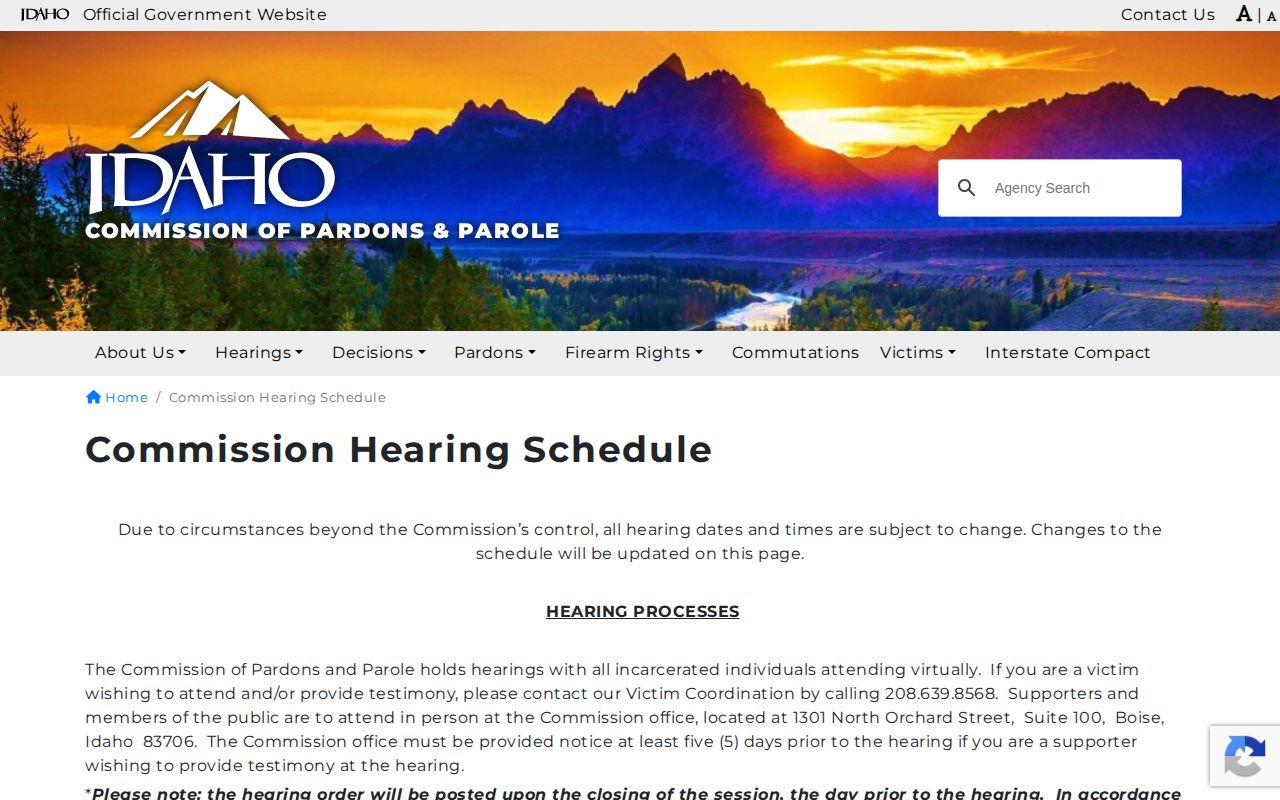
The schedule is evidence of a proceeding only. The later IDOC status is the stronger sign that the person actually entered community supervision.
Lemhi Status Versus Location
An IDOC detail record may say “In community” while its physical-location field names Lemhi County Jail. The status describes the state supervision relationship. The location describes where the person is reported to be held. A new arrest, violation matter, or other hold can make both lines accurate at the same time.
The representative IDOC community record shows the types of supervision and sentence fields available.
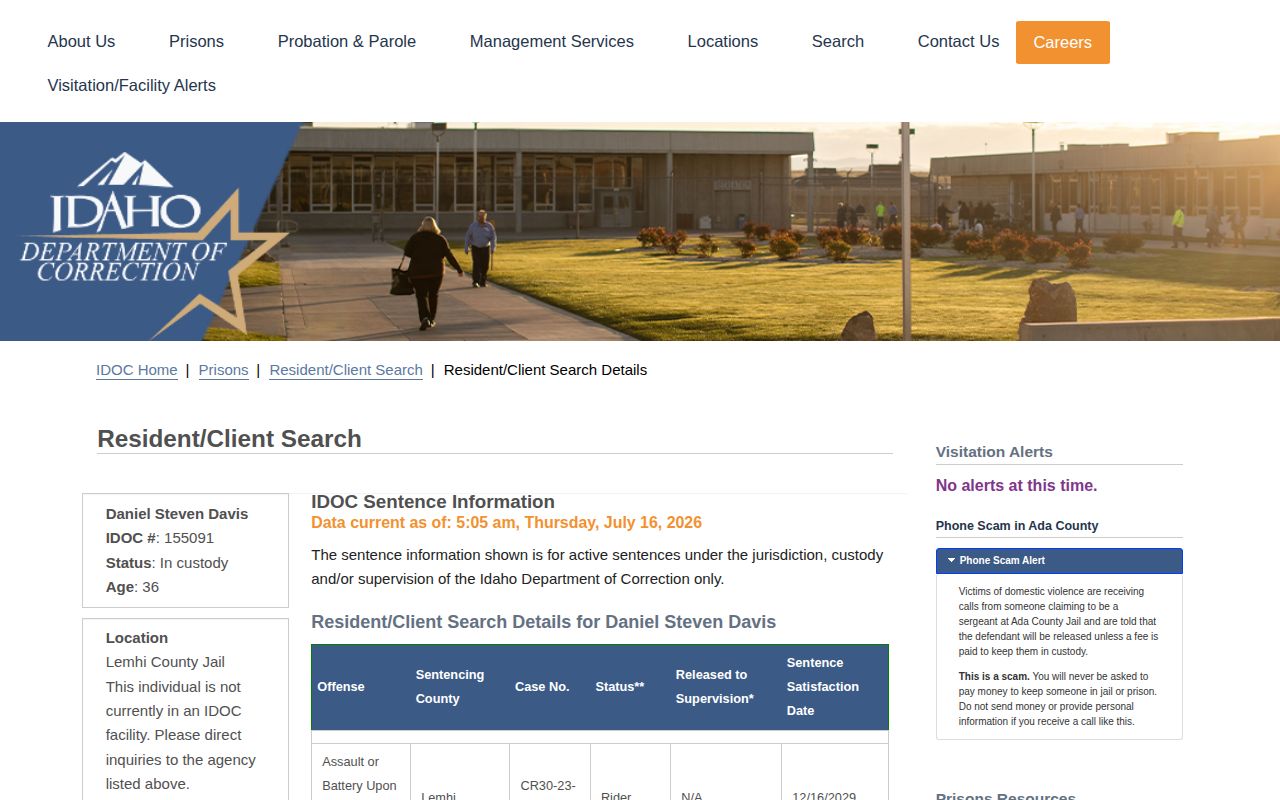
Read legal status, physical custody, and final discharge as three facts. Calling one field “release” without the other two can create the wrong conclusion.
Note: IDOC says its public database updates daily, but fast custody and supervision changes may appear after an agency processing delay.